

If anxiety has been running your days — the racing thoughts, the tight chest, the constant “what if” — you may be wondering whether therapy can actually help. And if getting to an office every week feels like one more hurdle, you may also be wondering whether online therapy for anxiety works as well as sitting across from a therapist in person.
The short answer is yes. Anxiety is one of the most treatable mental health concerns, and research comparing online and in-person therapy has found that, for many people, they lead to similar results.
Below, we walk through what the research shows, which approaches help most, what online anxiety therapy actually looks like, when it may not be the right fit, and how to get started with a licensed therapist in Pennsylvania.
Is Therapy Effective for Anxiety?
Yes. Psychotherapy is one of the main evidence-based treatments for anxiety disorders, either on its own or together with medication. [1]
The approach with the most research behind it is cognitive behavioral therapy (CBT). A large review of meta-analyses found strong support for CBT across anxiety disorders, including generalized anxiety, panic disorder, and social anxiety. [2] Clinical reviews of anxiety treatment also describe CBT as a first-line psychological treatment. [3]
What “effective” looks like is worth being clear about. Therapy rarely makes anxiety disappear overnight, and it isn’t meant to remove every anxious feeling — some anxiety is a normal part of being human. Instead, people in therapy typically notice that:
- Anxious episodes become less frequent and less intense. Worry or panic still shows up, but it passes more quickly.
- Avoidance shrinks. Situations that once felt impossible become manageable again.
- Coping becomes automatic. You have practical tools you can use in the moment, not just in session.
- Sleep, focus, and relationships improve. Less energy goes into managing fear, so more is left for the rest of life.
So does therapy work for anxiety? For most people who stick with it, yes — and the benefits often last after therapy ends because the skills stay with you.
Is Online Therapy as Effective as In-Person Therapy for Anxiety?
This is the question most people searching for online anxiety therapy really want answered — and the research is encouraging.
- Live video and phone therapy. A meta-analysis of 20 randomized controlled trials comparing teletherapy (video or telephone sessions with a therapist) to in-person therapy found no significant difference in outcomes at the end of treatment or at follow-up, and no difference in how many people dropped out. [4]
- Internet-based CBT. A systematic review of 20 studies that directly compared therapist-guided internet CBT with face-to-face CBT found the two formats produced equivalent overall effects. [5]
- Anxiety and depression specifically. An updated meta-analysis of 64 trials found internet-delivered CBT was effective for generalized anxiety disorder, panic disorder, social anxiety disorder, and depression, with improvements maintained at follow-up. [6]
In other words, the effectiveness of therapy doesn’t depend on being in the same room as your therapist. What matters most is the quality of the therapeutic relationship and the approach being used.
That’s also why the terms you may see — teletherapy for anxiety, virtual therapy for anxiety, online anxiety counseling, or anxiety telehealth — all point to the same idea: real therapy with a licensed professional, delivered through a secure video or phone connection instead of an office.
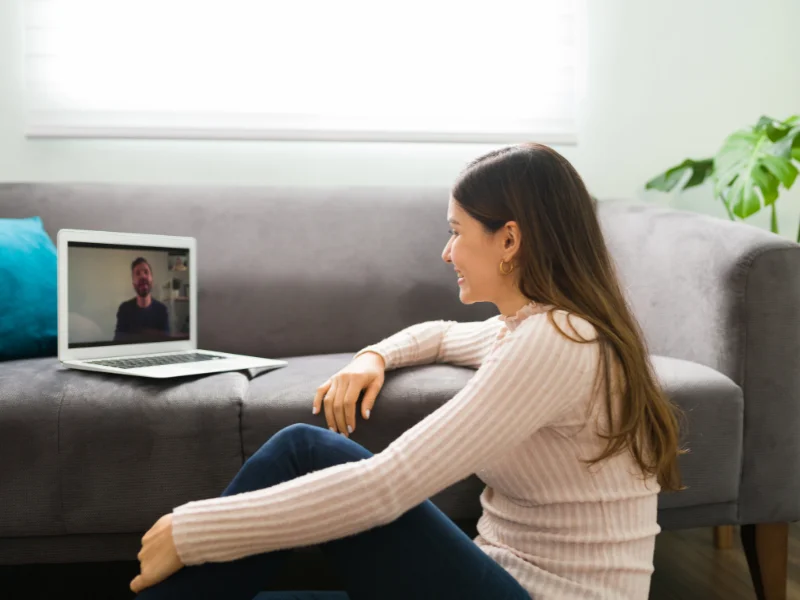
Why Online Therapy Can Work Especially Well for Anxiety
Online therapy has grown quickly, and not just because it’s convenient. For people living with anxiety, the format itself can remove some of the obstacles that keep them from getting help.
Comfort and safety
Being in your own space can make it easier to open up — especially if you live with social anxiety or panic symptoms and the idea of a waiting room is stressful in itself.
Fewer barriers to getting started
Avoidance is one of the hallmarks of anxiety. When starting therapy means a commute, parking, and sitting in a waiting room, it’s easy to put it off. Removing those steps makes the first session — and every session after it — easier to show up for.
Flexible scheduling
Sessions fit more easily into daily life without travel or time off work. eTalkTherapy offers evening and weekend times.
Consistency
Progress in anxiety therapy builds week by week. Fewer missed sessions due to traffic, weather, or a hard day often means steadier progress.
Practicing skills where anxiety actually happens
Because you’re at home, the tools you learn — breathing, grounding, challenging anxious thoughts — are practiced in the same environment where anxiety tends to show up, which can make them easier to use on your own.
What Types of Anxiety Can Online Therapy Help?
Online therapy can help with most of the anxiety concerns people bring to an in-person office, including:
- Generalized anxiety — persistent worry that’s hard to switch off.
- Panic attacks and panic disorder — sudden surges of fear, often with physical symptoms like a racing heart or shortness of breath.
- Social anxiety — intense worry about being judged, embarrassed, or rejected.
- Health anxiety — ongoing fear about having or developing a serious illness.
- Stress, burnout, and anxiety during life transitions — a new job, a breakup, becoming a parent, or getting older.
- Anxiety alongside depression — the two often occur together, and therapy can address both.
- Trauma-related anxiety — where past experiences continue to fuel fear in the present.
Not sure whether what you’re feeling counts as an anxiety disorder? You don’t need a diagnosis to start therapy. If anxiety is affecting your daily life — your sleep, work, relationships, or ability to enjoy things — that’s reason enough to talk to someone.
Which Types of Therapy Help Anxiety Most?
There is no single “best” therapy for anxiety, because anxiety itself isn’t one-size-fits-all. A good therapist will tailor the approach to you. These are the approaches our therapists most often use, all of which work well online.
Cognitive Behavioral Therapy (CBT)
CBT focuses on identifying and changing the unhelpful thought patterns and behaviors that keep anxiety going. It is structured, goal-oriented, and has the strongest research base for anxiety disorders. [2] CBT often includes gradual exposure — facing feared situations step by step, with support — which helps your brain learn that those situations are safer than they feel.
Mindfulness-based approaches
Mindfulness Based Stress Reduction and related approaches teach you to notice anxious thoughts and body sensations without getting pulled into them. They pair well with practical coping skills for anxiety and grounding techniques you can use in the moment.
EMDR for trauma-related anxiety
When anxiety is rooted in painful or traumatic experiences, Eye Movement Desensitization and Reprocessing (EMDR) can help reduce the emotional charge of those memories. eTalkTherapy offers certified EMDR treatment.
Existential therapy
Some anxiety is less about specific triggers and more about life’s bigger questions — uncertainty, meaning, responsibility, change, and mortality. Existential therapy helps you face uncertainty rather than avoid it, reconnect with your values, make meaningful choices even in difficult circumstances, and live more authentically. Rather than trying to eliminate anxiety, it helps change your relationship with it, so anxiety becomes a guide for growth and self-understanding instead of something to fear.
Talk therapy and humanistic approaches
These approaches emphasize emotional understanding, self-exploration, and the therapeutic relationship itself as the vehicle for change. Feeling heard, supported, and understood without judgment is powerful on its own — and it creates the safety needed to try new ways of coping.

What to Expect in Online Anxiety Therapy
Therapy often feels intimidating because people don’t know what to expect. Online, the process is simpler than many imagine.
Before your first session
You’ll need a private, quiet space and a phone, computer, or tablet with a reliable connection. Sessions take place over a secure, HIPAA-compliant platform, so what you share stays confidential.
Your first sessions
Early sessions focus on understanding your concerns, goals, and background — exploration, not interrogation. Your therapist will also explain how therapy works, including expectations, communication, and fees.
As therapy continues
Sessions are usually weekly at first. You’ll work on understanding your anxiety, learning and practicing skills, and gradually facing what you’ve been avoiding. Many people notice some relief within the first several weeks, though meaningful, lasting change takes time and varies from person to person.
Knowing it’s working
Progress often looks like fewer intense episodes, better coping, improved sleep, and more confidence handling stress — not necessarily the complete absence of anxiety. Your therapist will check in on your goals along the way and adjust the approach if something isn’t helping.
When Online Therapy May Not Be the Right Fit
Online therapy is effective for many people, but it isn’t ideal for every situation. People experiencing a mental health crisis, thoughts of harming themselves, or symptoms that require intensive or in-person support may need a higher level of care. A good therapist will help you decide what’s most appropriate — and help you find it if online therapy isn’t the right fit.
If you or someone you know is in crisis, please call or text 988 (Suicide & Crisis Lifeline), call 911, or go to the nearest emergency room.
Is Therapy Worth It for Anxiety?
For most people, yes. Anxiety tends to grow when it’s left alone — avoidance makes the world feel smaller, and worry can spill into sleep, health, work, and relationships. Therapy offers a way to break that cycle with skills that last well beyond your final session.
Cost is a real consideration, and it shouldn’t be a barrier to asking questions. eTalkTherapy accepts a range of insurance plans and offers affordable self-pay options. During your free consultation, we’ll go over fees and insurance with you before you commit to anything.
How to Start Online Therapy for Anxiety With eTalkTherapy
eTalkTherapy offers online therapy for adults in Pittsburgh and throughout Pennsylvania. Getting started takes a few minutes:
- Request a free consultation. Fill out the short form or call us at 412-748-0443.
- Hear back quickly. All calls and emails are returned within one business day.
- Meet your therapist. We’ll match you with your preferred therapist, if you have one, or the next available licensed therapist.
- Start therapy from home. Secure, HIPAA-compliant video or phone sessions, with evening and weekend times available.
The most important step isn’t choosing the “perfect” approach — it’s choosing to begin. Reaching out while you’re anxious is already an act of courage, and it’s one worth taking.
Online Anxiety Therapy in Pennsylvania
Talk With an eTalkTherapy Therapist
If anxiety is getting in the way of your life, a free consultation is a calm first step. We’ll talk about what you’re going through, fees and insurance, and match you with a licensed therapist for secure online sessions.
Frequently Asked Questions
Is online therapy effective for anxiety?
Yes. Research shows online therapy can be an effective treatment for anxiety, especially when it uses evidence-based approaches like cognitive behavioral therapy (CBT). Studies have found improvements for generalized anxiety, panic disorder, and social anxiety.
Is online therapy as effective as in-person therapy for anxiety?
For many people, yes. Meta-analyses of randomized trials have found no significant difference in outcomes between video or phone therapy and in-person therapy, and similar results for therapist-guided internet CBT compared with face-to-face CBT.
Can online counseling help with severe anxiety?
Online counseling can help many people with significant anxiety, including frequent panic attacks. However, anyone in crisis, at risk of harming themselves, or needing intensive support may need in-person or higher-level care. A consultation can help determine the right fit.
Can therapy cure anxiety?
Therapy doesn’t eliminate all anxiety — some anxiety is a normal, healthy part of life. But it can greatly reduce how often and how strongly anxiety shows up, and give you lasting skills to manage it, so it no longer controls your choices.
How long does therapy for anxiety take?
It varies. Many people notice some relief within the first several weeks, and structured approaches like CBT often run for a few months of weekly sessions. Your therapist will review progress with you and adjust the plan along the way.
What is the difference between teletherapy, virtual therapy, and online counseling?
These terms are generally used interchangeably. They all describe therapy with a licensed professional delivered remotely, usually through secure video or phone sessions, rather than in an office.
Is online anxiety therapy private and secure?
It should be. eTalkTherapy uses a secure, HIPAA-compliant platform for sessions. For the best experience, join from a private space where you feel comfortable speaking openly.
What if I’m unsure about starting therapy?
Feeling unsure is common, and many people begin therapy with questions or doubts. A free consultation lets you ask about the process, fees, and insurance, and decide whether therapy feels right for you — with no commitment.
Sources
- National Institute of Mental Health. Anxiety Disorders.
View on NIMH - Hofmann, S. G., Asnaani, A., Vonk, I. J., Sawyer, A. T., & Fang, A. The Efficacy of Cognitive Behavioral Therapy: A Review of Meta-analyses. Cognitive Therapy and Research, 2012.
View on PubMed / National Library of Medicine - Bandelow, B., Michaelis, S., & Wedekind, D. Treatment of Anxiety Disorders. Dialogues in Clinical Neuroscience, 2017.
View on PubMed / National Library of Medicine - Lin, T., Heckman, T. G., & Anderson, T. The Efficacy of Synchronous Teletherapy Versus In-Person Therapy: A Meta-Analysis of Randomized Clinical Trials. Clinical Psychology: Science and Practice, 2022.
View on APA PsycNet - Carlbring, P., Andersson, G., Cuijpers, P., Riper, H., & Hedman-Lagerlöf, E. Internet-Based vs. Face-to-Face Cognitive Behavior Therapy for Psychiatric and Somatic Disorders: An Updated Systematic Review and Meta-Analysis. Cognitive Behaviour Therapy, 2018.
View on PubMed / National Library of Medicine - Andrews, G., Basu, A., Cuijpers, P., et al. Computer Therapy for the Anxiety and Depression Disorders Is Effective, Acceptable and Practical Health Care: An Updated Meta-Analysis. Journal of Anxiety Disorders, 2018.
View on PubMed / National Library of Medicine